



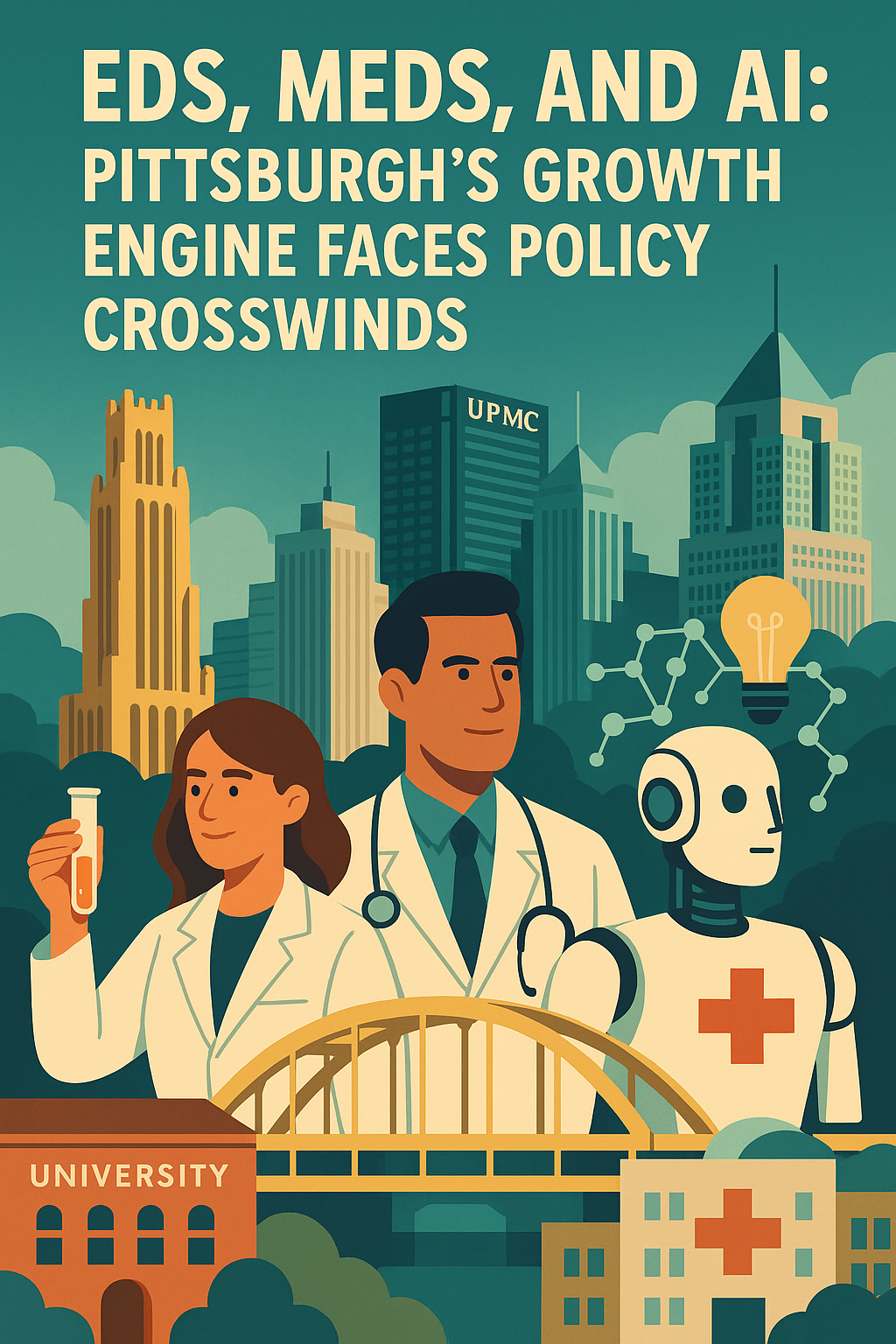
Pittsburgh’s modern growth engine—universities, hospitals, and frontier technologies in robotics and AI—continues to attract talent and investment, even as national policy debates introduce uncertainty around research funding, immigration, and higher-education ecosystems.
For Upper St. Clair, the upside is clear: professional services, supply chains, and clinical innovations radiate economic benefits into suburban communities when the urban core’s anchor institutions thrive. Anchors and Assets-Carnegie Mellon University, the University of Pittsburgh, and significant health systems underpin a dynamic innovation economy, with spinouts, clinical trials, and partnerships at nodes like Hazelwood Green and Bakery Square. These hubs attract startups and corporates in autonomy, AI, and life sciences, building a high-wage job base that fuels demand for specialized services and quality-of-life amenities across the South Hills.
Labor data corroborate the engine: education and health services led the region’s year-over-year job gains in August, with 12,900 new jobs, or a 5.1% increase.Data callout:Eds & meds job gains: +12,900 year over year (+5.1%). Innovation hubs: Hazelwood Green, Bakery Square clusters.
Spillovers: professional services and supplier demand.
Policy Crosswinds and Risk coverage highlights concerns that shifts in federal policies affecting higher education and research could disrupt pipelines for grants, graduate talent, and commercialization, potentially chilling investment in university-adjacent sectors. Immigration policy remains pivotal for maintaining a steady influx of international graduate students and researchers who feed AI and robotics labs and regional startups. These crosswinds do not negate the asset base, but rather argue for an aggressive regional strategy to diversify funding and deepen industry-university collaboration.
Data callout: Risk vectors: federal research funding and immigration flows.
Exposure: university-led research commercialization.
Hedge: diversified funding and partnerships.
Practical Plays for South Hills Firms: Upper St. Clair businesses can engage through capstone projects, co-op placements, and procurement with hospital systems, channeling innovation into productivity gains and new offerings. AI adoption that augments teams—such as workflow automation, analytics, and patient navigation—can boost service quality without eroding workforce cohesion, a balance key to retention in a tight labor market.
With Downtown conversions aiming to attract young professionals, suburban amenities—such as schools, housing, and recreation—remain differentiators that can capture spillover residential demand.
Data callout:Engagement: co-ops, capstones, health-system procurement.
AI use: augment, don’t replace; raise service quality.
Housing link: Downtown density + suburban school appeal.
Keeping Momentum Amid Uncertainty: Regional coalitions should align on grant strategies, workforce pathways, and infrastructure that supports lab, clinical, and tech growth, while measuring outcomes such as startup formation, lab space absorption, and talent retention. If the revitalization agenda sustains a safer, more livable core, the talent flywheel strengthens—and South Hills enterprises stand to benefit from higher-value contracts and steady consumer demand. The imperative is execution and adaptability in the face of policy shifts.