



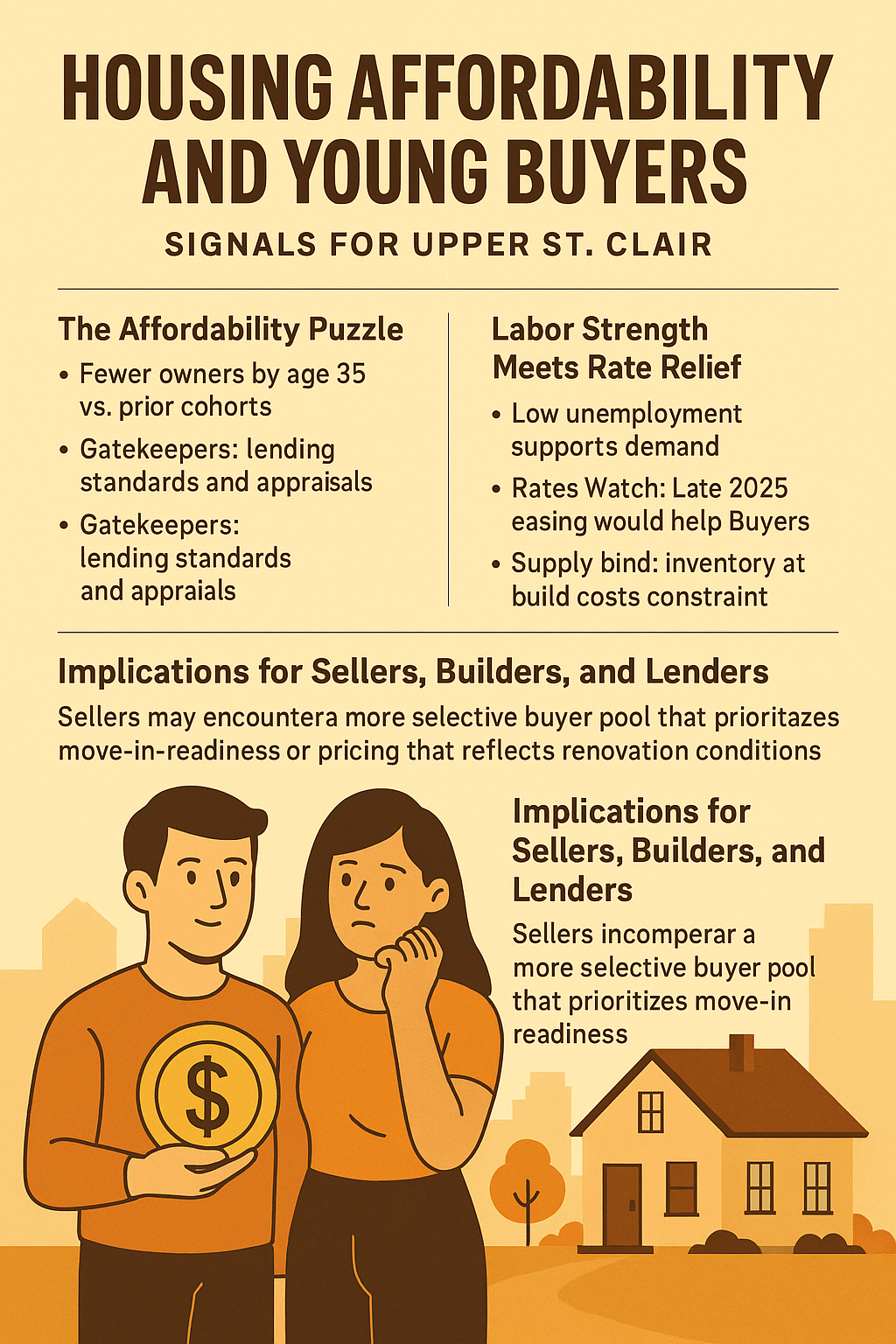
Homeownership by age 35 is no longer a given for many Pittsburgh-area residents, as student debt, income dynamics, and renovation costs on aging housing stock delay purchases and reshape demand across suburban markets like Upper St. Clair. These trends intersect with a steady labor market and tentative easing of mortgage rates, creating a complex backdrop for buyers, sellers, and local service providers.
The Affordability Puzzle
PublicSource reporting highlights that younger households face higher barriers to entry, resulting in more extended rental periods and more cautious home searches, particularly in areas with limited inventory or homes that require significant renovations. Upper St. Clair’s strong schools and community amenities keep demand robust, but budget constraints push interest toward smaller footprints, renovation-ready homes, or areas with more flexible price points. Mortgage-rate movements will matter, but lending standards and appraisal dynamics remain gatekeepers for marginal buyers.
Data callout:
Trend: fewer owners by age 35 vs. prior cohorts.
Pressure points: debt load + renovation costs.
Gatekeepers: lending standards and appraisals.
Labor Strength Meets Rate Relief
With unemployment at 3.9% and year-over-year payroll growth of 1.4%, regional income fundamentals support housing demand, though wage growth varies by sector. If mortgage rates continue to decline from midyear highs into late 2025, monthly payments on mid-market homes could improve, especially for well-qualified borrowers with strong credit and sufficient down payments. However, persistent inventory tightness and construction costs keep a lid on how far affordability can stretch absent policy or supply shifts.
Data callout:
Jobs backdrop: low unemployment supports demand.
Rates Watch: Late-2025 Easing Would Help Buyers.
Supply bind: inventory and build costs constrain relief.
Implications for Sellers, Builders, and Lenders
Sellers may encounter a more selective buyer pool that prioritizes move-in readiness or pricing that reflects renovation needs, with staging and pre-inspections helping to reduce friction. Builders and remodelers can leverage energy-efficient retrofits and cost-transparent renovation packages to de-risk older home purchases for young families. Lenders and realtors who emphasize renovation loans, down-payment assistance, and education on contingencies will be better positioned to convert hesitant shoppers into confident buyers.